


Redeeming Love – A Conversation with Francine Rivers

I am an avid reader. When I was growing up, books were my solitude, and I devoured every book my tiny hands could get. One of the most memorable books I read as an undergraduate was Redeeming Love by Francine Rivers. It tells the story of a young lady named Sarah and the man who would become her husband, Michael Hosea. The book is based on the story of Hosea in the Bible, which captures the kind of pure love God has for us, regardless of our sins. Sarah was unwanted by her father, and her mother died when she was eight. With no way out of surviving through life and good parental coverage, Sarah fell into the hands of a pedophile and was coerced into unclean acts for ten years. After escaping, she turned to prostitution to survive since that was all she knew. In the brothel where she worked, she was the highest-priced, and men would queue to spend thirty minutes with her.

Michael entered the equation of Sarah’s life as a man who loved and feared God. While in town to sell his produce, he saw Sarah, who was popularly known as Angel, and God told him Angel was his wife. Michael was surprised when he found out what she did for a living. To escape the brutality in the brothel, Angel agreed to marry Michael, and he took her home. During their life together, Angel ran away from Michael four times. Twice, she went back to prostitution, and even though Michael accepted her back with love, he battled bitterly with God on how to deal with his anger and disappointment. Then, he got another news that Angel could not give birth. To a man who wanted children, it was devastating news. The last time Angel left Michael, he resolved not to look for her. Instead, he continually prayed for her. Thankfully, Angel found Christ and returned to Michael of her own accord.
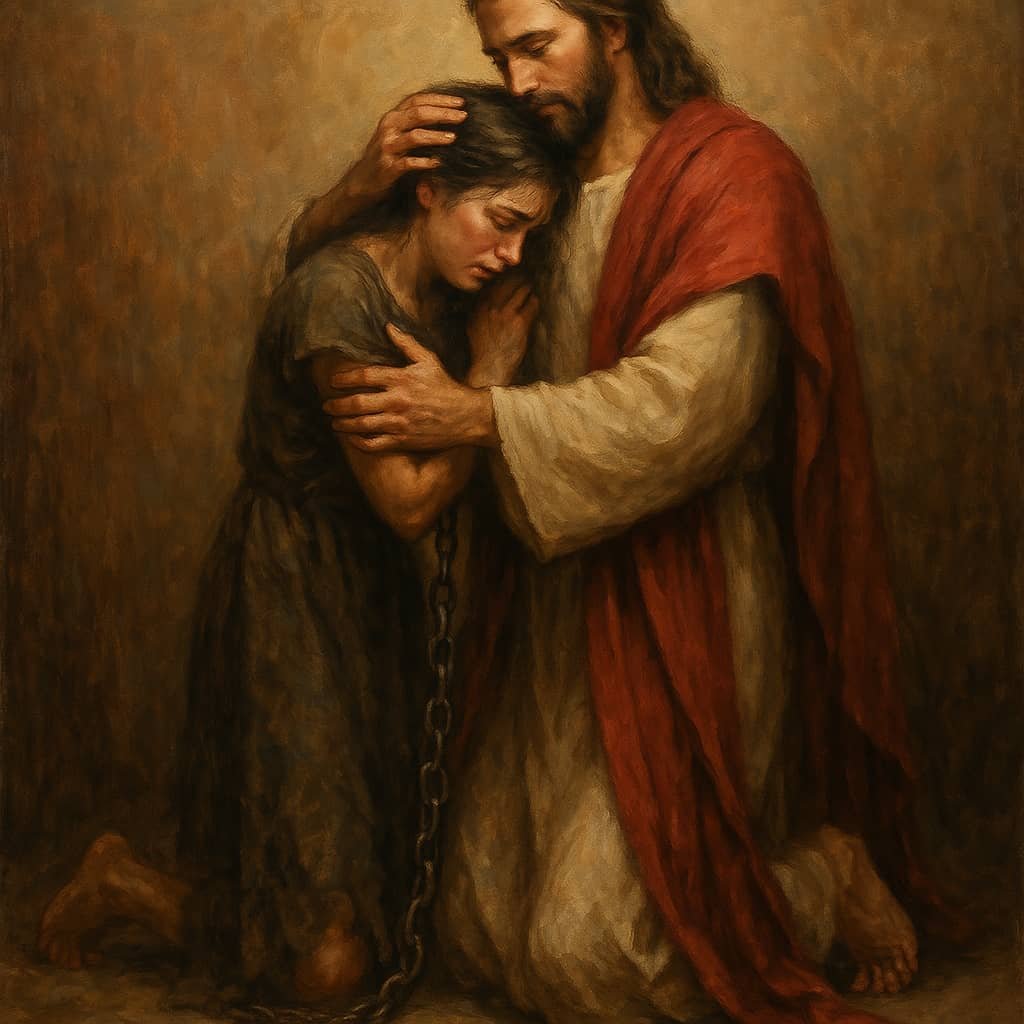
This captivating story took me back to reading the book of Hosea, and I was blown away. I had many questions about why God chose such a woman for his child, Hosea. I did not understand the reasoning behind the decision and battled the different scenarios in my head many times. Irrespective of the angle through which I looked at it then, picking Gomer for Hosea felt like a punishment. However, with the approaching Easter ceremony, I understood why this book stayed on my mind and why it’s such a powerful story about human salvation despite being lost in sin. I kept returning to the book and the Bible story and gradually began to read between the lines. I saw the sacrificial love of God towards the children of Israel despite their frequent backsliding away from the covenant of the God of Israel. When I fully understood what God did there, I became thankful for my freedom, redemption in Christ, and the gift of salvation I received through Christ Jesus.

As a believer, I missed my way so many times, but I learned to treasure the grace of being a child of God when I returned to Him, sober, weary, humble, and almost giving up on myself. In Christ, I found hope and started dreaming again.

This book will be a good read for everyone, irrespective of their faith, background, or theological conviction. It is a book about forgiveness, healing, and hope for a life that could still be possible despite one’s ugly past lifestyle. I will recommend the book to everyone seeking forgiveness and salvation from God.

If you are passionate about writing and understand the power to shape culture through writing, please contact us immediately, and our representatives will walk you through how you can join our team of writers at the Africana Leadership Digest.

Total
0
Shares
Leave a Reply

Your email address will not be published. Required fields are marked *

Previous Article

Lekki Shooting Massacre: A Lamentation of Human Suffering through Police Brutality

Next Article

The Virtue of Work and the Making of a Fully-grown Person

Related Posts
Read More

The Extent of Humanness and the Dignity of a Person

In recent decades, there have been vast misconceptions about gender roles, differences, and definitions. The more traditional way of conceptualizing a person's humanness and dignity is by understanding what people mean when they talk about dignity and humanity. Dignity and humanity from time immemorial are a person's inherent virtues. Of course, this can be stated more clearly concerning a person's self-worth or self-respect. Virtue, stated differently, is about the person's intrinsic character content that reveals their personhood. It is the very essence of a person that makes them a unique individual or virtuous being.Have you ever sat down to ask yourself what it means to be human? Every day, I try a little here and there to ponder on this for the sake of justice and equity for everyone who crosses my path. I often ask myself, what are the basic features or characteristics to watch out for to conclude the extent of the humanness of a person? Is it because one can talk, run, walk, and work or engage in intellectual discourse and co-exist with fellow humans? Is it because of our physical body structure? Or is it because we possess a memory that keeps details of our past behaviors?How do we want to differentiate or define a human from other primates, for instance, since many primates could perform some of these essential functions mentioned above?
Read More

Why Do I Need to Live My Life with Purpose and Meaning?

The question that comes to my mind every day I wake up from my bed is: What legacy do I plan to leave after I am gone? The answer is what inspires me every day to work with people with mental health disabilities, and that is one of the areas where I derive meaning for my life. It is why I took Clinical Pastoral Education (CPE) Units 1 – 4. It is the same reason I have become a Certified Mental Health Coach and Certified Mental Health Advocate.I dream of radically transforming the mental health sector across Sub-Saharan Africa, hence my intentional immersion in how it is done in a more advanced society like the US. The effort here is to concentrate on my future legacy so that when people remember me, they will remember me as a worthy example to emulate.
Read More

Saint Augustine on Sin

The sin of Adam in the narrative of the Bible, to a critical mind like Augustine, far outweighs the symbolic representation of eating fruit. The weight of condemnation and the generational consequence that it manifests in perpetuity always leaves one wondering what exactly could have been the nature of Adam's sin. The Bible records sin as eating the fruit of both knowledge of good and evil. To a critical mind, the problem is not so obvious but symbolic, for the nature of the fruit is a situation where there is a simultaneous possession of both sudden awareness of right and evil, which is paradoxical to a critical mind.
Read More

What is a Good Life?

The virtues constituting a good life have been an age-long debate among philosophers. Socrates argued that a good life must be cultivated and chiefly valued. Aristotle conceived it as eudaimonia, the highest human good, the only good desirable for its own sake (as an end in itself) rather than for the sake of something else (as a means toward some other end). Generally speaking, eudaimonia is a Greek word for well-being, living well, happiness, and flourishing.Undoubtedly, everyone desires a good life or eudaimonia, but our challenge is how we might attain it without hindering the flourishing of other people around us. You can achieve a good life if you focus on developing a growth plan for yourself, decide to collaborate with other people, and give a good portion of your estate for others to benefit.
Total
0
Share