



Browsing Category
Transformational Leadership
9 posts

Re-imagining the Leadership Framework of African Society
Everyone, since Nkrumah, has emphasized Africa's great potential, but the question remains: Is potential all there is? Five decades later, Nkrumah’s optimism hasn’t been fulfilled! Successive leaders of the continent, plagued primarily by selfishness and greed after the colonial rule, have failed to create a compelling vision that captured Africans' imagination and transformed that vast potential into reality. I have often asked myself what type of leadership is most suitable for African society. This is a difficult question to ponder! It took me nearly three decades to process this. Another question of interest is what went wrong with the Monarchical style of leadership in Africa? Some observers have come down very hard on the Monarchical style of leadership. They argue that absolute power should not be concentrated in the hands of a single ruler. But when you look at Monarchy in its purest form, especially as depicted in my own tribal legends or myths, you can see that it is a type of leadership in which responsibility is shared through consultation and inclusive participation. The question often arises whether democracy is working in Africa. Democracy is an imported style of governance that was not properly adapted to suit African political philosophy and worldviews. Democracy is fragile and has its own weaknesses, as recently witnessed among some of the most sophisticated societies. For these reasons, I presupposed that the servant leadership approach should be researched and embraced within the African context. Since the post-colonial era, little progress has been made in the various political leadership structures, whether military or democratic. I am therefore postulating that servant leadership, with its plausibility of consultation and inclusive participation, will make a difference!

The Intent and Purpose of Leadership
There are many ways in which people have defined leadership across time and age. I have been privileged to come across a few of those definitions. Amazingly, all the ones I have come across in my study about leadership are insanely good. However, the definition that resonates with me the most was the one given by John Maxwell, who defines leadership as “Influence, nothing more, nothing less!” Maxwell also says, “Everything rises and falls on leadership!” I couldn’t agree less with him because, whichever way you look at leadership, it is simply about influencing, inspiring, and motivating people to do things they would not think of doing on their own. Leadership is taking people from a state of inactivity to a place of extraordinary accomplishment. When you can genuinely mobilize people to get things done without force or coercion, you become enlisted in this type of ingenious leadership. But when you fail as a leader to inspire people to get things done, it reveals a deep flaw in your leadership ability.
There have been many questions about those who aspire to become leaders. The problem is not always with leadership aspiration. Some people have thought it is wrong to aspire to become a leader. No! There is nothing wrong with wanting to be a leader. What you should be concerned about is why you want to become a leader. This is a question that reveals your leadership motive, intent, and purpose. Your motive is very important if you hope to become a leader that society would be proud of and to celebrate.
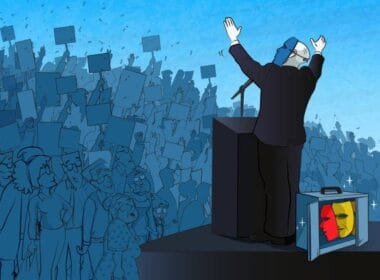
The Facade of Virtue
In today's society, it's not uncommon to encounter individuals who present themselves as paragons of virtue, justice, and equity. However, beneath the surface, their actions and behaviors often reveal a different story.The consequences of hypocrisy, eye-service, and pretense can be far-reaching and damaging. Anyone who engages in these behaviors risks losing the trust and respect of others, which in turn damages their reputation and compromises their integrity. Moreover, these behaviors can also lead to feelings of guilt, shame, and anxiety, which can negatively impact mental and emotional well-being.

Empathy: The Core of Modern Leadership
Leadership as an organizational management nuance has been debated among leadership experts as an art or a science. Leadership as an art is built on relationships and excellent communication skills that are inherent in a leader. It is the ability to apply leadership principles in a flexible, intuitive, and creative manner that reflects your make-up as an individual. Leadership as a science is based on the fact that there are methodologies, systemic approaches, processes, and models to follow for leadership performance. Regardless of the side of the divide that you belong to, it is important to know that leadership is a combination of both science and art. You cannot have the science of it without its artistic approach. That is why leading with empathy demonstrates the overlap that exists between the science of leadership and its art.Sometimes, people just need to be heard, not requiring their problem to be fixed. Accommodating their feelings and being present with them is often more powerful than giving them advice on how to fix their problems. Being with people is more important than working for people. Working for people is often too transactional, creating a parallel of a superhero and a victim, while being with them is the offering of our presence to them in their most difficult time.

Why Transformational Leaders Are the Real Nation Builders
To build any viable nation, you need a different species of leaders called transformational leaders. We have had lots of these enigmatic leaders throughout the history of human civilization. Still, society has a shortage of them in Africa and around the Globe in the twenty-first century. Most transformational leaders don’t need political power to change human society; they need their conviction, roadmap, and strategy more than anything else. Don’t let anyone deceive you into thinking that you can’t make a change until you become a politician. The American Society, envied by all, was principally built into a flourishing state by entrepreneurs. The role of the government was to provide policies to curb their excesses.

Maximizing Your God-given Potential
The best teaching on "Potential" I have ever heard was by the great preacher and teacher Dr. Myles Munroe, who has blessed many people even after his demise. I have seen myself stretch beyond what I could have counted for success and say, "Look, I have arrived!" I have discovered that I am still hungry for more because I know my vast, untapped resources. I always keep at least five years of personal goals upfront to motivate myself daily. Knowing there is something to accomplish every morning helps me approach life with dexterity.

The Two Inseparable Sides of a Transformational Leader
If there is a subject I have been passionate about in recent years, it must be transformational leadership. Transformational leadership is a reintroduced concept that is beginning to gain recognition among leading experts because of its role in effecting a cultural change in a society or organization. Although it has been around for a long time, many people do not know what it is and how to identify it in practice. Transformational leadership was first popularized in the 1970s by James MacGregor Burns when he tried to contrast its significance with transactional leadership.Burns argues that transactional leadership doesn't care as much about cultural change as the organization's bottom line. On the other hand, transformational leaders don't just move people toward a worthy cause by mere influence. They cause an actual change in how things have been in society or the organization over a set period. So, they are not just influencers, as you would naturally think of a leader. They are agents of change that cause a significant shift in how organizations or societies operate. A transformational leader's ultimate goal is to significantly alter people's behavior, resulting in societal or organizational development.
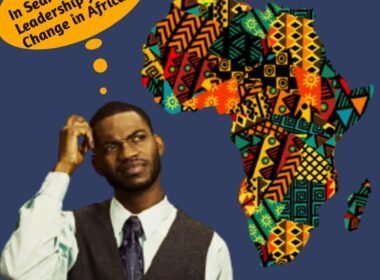
In Search of Creative Leadership for Social Change in Africa
The more I think about the possibility of a new Africa where you will no longer worry about…