


Month: November 2023
7 posts

Saint Augustine on Sin
The sin of Adam in the narrative of the Bible, to a critical mind like Augustine, far outweighs the symbolic representation of eating fruit. The weight of condemnation and the generational consequence that it manifests in perpetuity always leaves one wondering what exactly could have been the nature of Adam's sin. The Bible records sin as eating the fruit of both knowledge of good and evil. To a critical mind, the problem is not so obvious but symbolic, for the nature of the fruit is a situation where there is a simultaneous possession of both sudden awareness of right and evil, which is paradoxical to a critical mind.

The Paradox of the god of Gold and a Theological-Ethical Analysis of the Song of Solomon
What else could be more important than money? What in life should a man genuinely hold in high esteem besides love for money? This is one of the obvious questions that comes to mind in the narrative Song of Solomon by Toni Morrison. The narrative is about the insatiable quest of a young man called Milkman, about thirty-two years old, who embarked on a compulsive search for gold, which, according to him, he believes everybody needs, but not as much as him. Unfortunately, his father, Macon Dead, first established this unguarded passion for gold in his consciousness.
Macon Dead was under the spell of excessive accumulation and a strong appetite for materialism that negatively impaired his familial relationship with his wife, Ruth, and his sister, Pilate.

The Choice to Embrace One’s Self-Identity
Self-identity is a combination of your facial expression, intellect, capacity, capability, peculiarity, uniqueness, special gift, talent, or endowment, etc., that you possess. It is the totality of all your innate abilities culminating in your physical appearance and projected self-image. It often manifests in how you talk, walk, interact, and expect to be accepted by the people around you. The problem here is not people rejecting you for who you are, but you rejecting yourself for what you think you represent. The enemy working against you is not the other people but you standing in the way of your progress.

How to Defeat an Average Life
Your worst enemy in life is to be content with an average life. Average life is acceptance of one's fate in the midst of plenty. It is a more precarious state of despair, worthlessness, and hopelessness. Average life is a state of self-condemnation and a feeling of not being good among one's peers. On many fronts, encountering failure in life's tasks is more important and noble for a man than for him to settle for an average living. However, the most beautiful thing about failure is that failure always has something to teach you. There is usually an opportunity to learn when you try and fail if you don't give up. But an average life is lived in the valley of self-pity, whining, and striving to maintain the status quo.
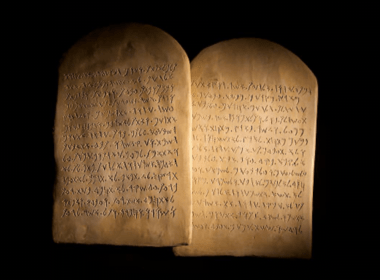
Ten Commandments for Possibility Thinkers
Potential is a fascinating subject, but it's worth nothing if you don't put it to work. To perfectly utilize your God-given potential, you have to believe in yourself. You must practice a possibility thinker's ten commandments to believe in yourself.
Robert Schuller, the author of the famous book "Tough Times Never Last, But Tough People Do", outlined those commandments we must obey if we desire to flourish in life. As an undergraduate, I posted those commandments on the back of the door of my room, and I always read them before I went out for the day. Schuller, as a kid growing up, dreamed of pastoring and building a church that would be all glass and crystal clear for anyone worshipping to see through the sky. He imagined a situation where, when he prayed to God, there wouldn't be any barrier between him and his visual accessibility to God. The Crystal Cathedral was built and dedicated in 1980 for $18 million, the equivalent of about $51 million today, despite being raised in an impoverished background.

From the Relics of the First Century Church – A Conversation with Frank Viola
Frank Viola, through his book "Reimagining Church: Pursuing the Dream of Organic Christianity," has been able to raise vital issues that confront the traditional Church as we know it and the challenge of continued reliance on the framework of such a "model" of churches within contemporary society. Frank argues that a revolution is upon us regarding the non-viability of the present model of church structure. He observes that the answer to this problem is not to reform or renew as many have tried to do, but to completely overhaul the whole system by adopting the organic approach: "that is relational in its functioning; scriptural in its form; Christ-centered in its operation; Trinitarian in its shape; communitarian in its lifestyle; non-elitist in its attitude; and nonsectarian in its expression."
Frank is saddened that the Church of Jesus Christ has regressed rather than progressed from her earliest practices of organic church formation as expressed in the New Testament. More than anything else, he singled out the clergy system practiced by many of the institutional churches as the sole culprit for the malfunctioning of the church system.

Maximizing Your God-given Potential
The best teaching on "Potential" I have ever heard was by the great preacher and teacher Dr. Myles Munroe, who has blessed many people even after his demise. I have seen myself stretch beyond what I could have counted for success and say, "Look, I have arrived!" I have discovered that I am still hungry for more because I know my vast, untapped resources. I always keep at least five years of personal goals upfront to motivate myself daily. Knowing there is something to accomplish every morning helps me approach life with dexterity.